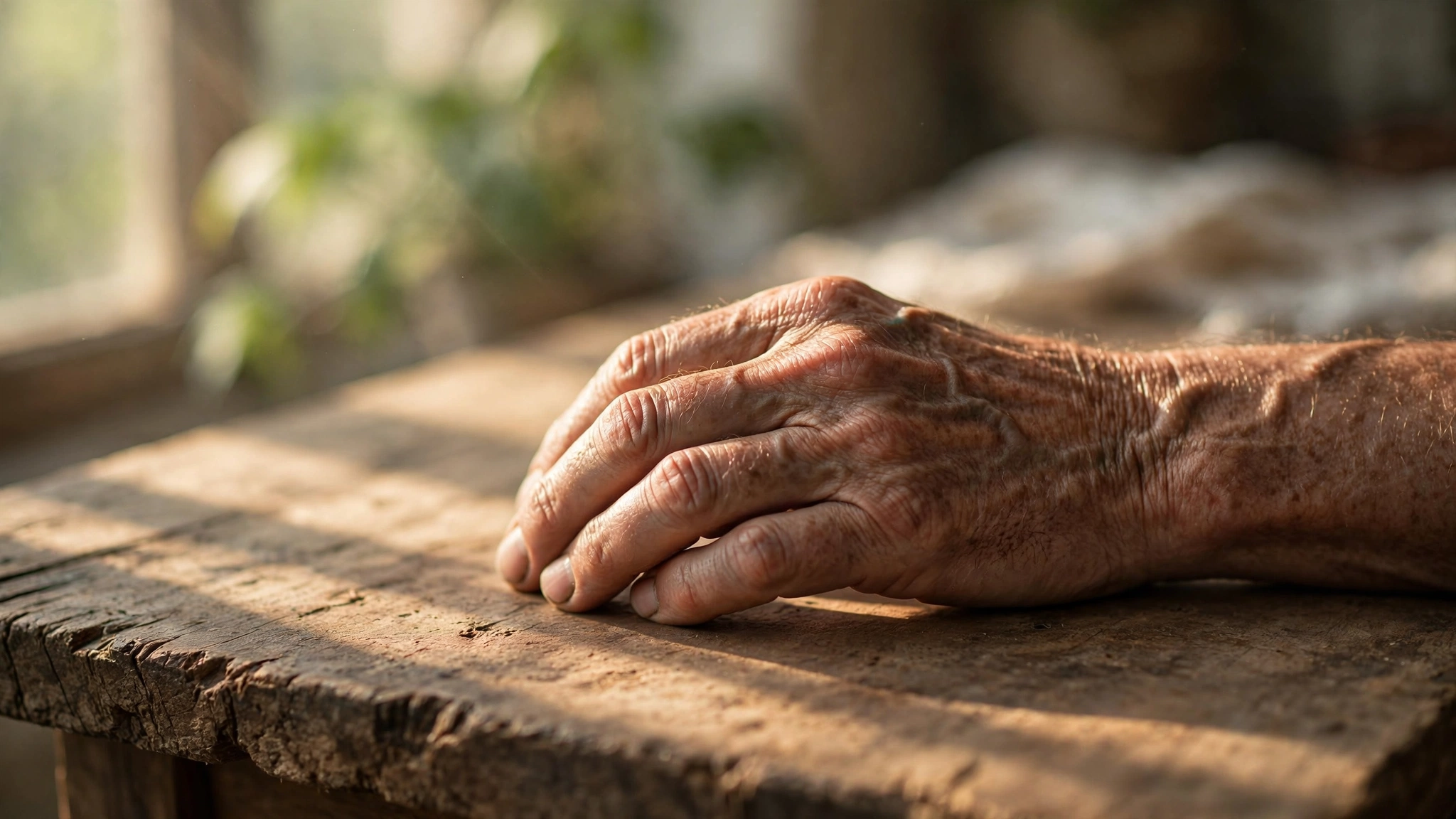
The Vital Sign Nobody Measures
Walk into any clinic in any country and a nurse will wrap a cuff around your arm within sixty seconds. Blood pressure has been the bedrock vital sign since 1896, anchoring cardiovascular risk scores, dictating medication decisions, and filling the opening line of every annual physical examination conducted anywhere in the world.
Darryl Leong, a cardiologist at McMaster University, wanted to know if a simpler test might do just as well. He handed 139,691 people in 17 countries a Jamar dynamometer, asked them to squeeze as hard as they could, and waited to see who died.
Grip strength won.
The Numbers Behind the Squeeze
The Prospective Urban Rural Epidemiology study enrolled adults aged 35 to 70 from high-income countries like Canada and Sweden, middle-income countries like Brazil and Turkey, and low-income countries like Bangladesh and Zimbabwe. Participants were followed for a median of four years, during which 3,379 of them died.
After adjusting for age, sex, education, physical activity, smoking, alcohol, BMI, diabetes, and other confounders, every 5 kg reduction in grip strength was associated with a 16% increase in all-cause mortality (HR 1.16, 95% CI 1.13–1.20, p<0.0001) and a 17% increase in cardiovascular death (HR 1.17, 95% CI 1.11–1.24, p<0.0001). The same decrement predicted a 7% increase in heart attacks and a 9% increase in strokes (Leong et al., 2015).
Here is the comparison that stopped epidemiologists cold. When the researchers placed grip strength and systolic blood pressure into the same model, grip strength was the stronger predictor of both all-cause and cardiovascular mortality, meaning a measurement requiring no electricity, no calibration, no medical training, and a device costing under thirty dollars outperformed the test that has defined cardiovascular screening for more than a century.
Half a Million People Confirmed It
Three years later, Carlos Celis-Morales and colleagues at the University of Glasgow tested the finding in the UK Biobank: 502,293 people, mean follow-up of 7.1 years, and almost identical results. Every 5 kg lower grip strength corresponded to 16% higher all-cause mortality in men and 20% in women, with cardiovascular death hazard ratios reaching 1.22 for men and 1.19 for women (Celis-Morales et al., 2018).
Stuart Gray, the study's senior author, summarized it bluntly: grip strength "predicted risk of death and cardiovascular disease even more strongly than systolic blood pressure or physical activity." The associations were slightly stronger in younger participants, eliminating the objection that grip testing is only useful as a geriatric frailty screen.
By 2022, Rubén López-Bueno and colleagues had pooled 48 prospective cohort studies covering 3,135,473 participants in a dose-response meta-analysis, and the pattern held across every population tested. The curve for all-cause mortality was close to linear: every kilogram mattered, with no evidence of a safe threshold below which grip strength stopped predicting survival (López-Bueno et al., 2022).
An Original Calculation
The Celis-Morales team found that adding grip strength to an established office-based risk score (age, sex, diabetes, BMI, systolic blood pressure, smoking) improved the C-index for cardiovascular mortality by 0.012. Applied to the 695,000 Americans who die of heart disease annually, that 1.2% improvement in prediction accuracy corresponds to roughly 8,340 deaths per year where a $30 dynamometer would have flagged risk that blood pressure alone missed.
Why a Hand Predicts a Heart
Grip strength is not merely measuring your forearm; it serves as a composite readout of the body's neuromuscular, hormonal, nutritional, and inflammatory status. Chronic inflammation, insulin resistance, malnutrition, and hormonal disruption all erode muscle mass, and each of these processes is independently linked to cardiovascular disease, which means the dynamometer collapses multiple distinct pathological signals into a single number without requiring blood draws, imaging, or fasting. A 2024 narrative review in the Journal of Health, Population, and Nutrition proposed reclassifying grip strength as a "new vital sign" (Vaishya et al., 2024).
The Strongest Case Against
The most serious objection is reverse causation. People with undiagnosed cancer, advancing heart failure, or chronic infection lose muscle mass before their condition becomes clinically apparent. In this view, low grip strength does not cause mortality; it merely detects illness already in motion, the way a falling barometer detects an approaching storm without generating the wind. This matters.
But so does the rebuttal. The PURE study's four-year follow-up is relatively short, and deaths early in the study period are more plausibly explained by pre-existing conditions than by grip strength as an independent factor. A 2020 analysis by Laukkanen and colleagues in Annals of Medicine showed the association persisted even after excluding deaths in the first two years, which reduces but does not fully eliminate the concern (Laukkanen et al., 2020).
Crucially, no randomized trial has shown that improving grip strength through training reduces mortality, because the entire evidence base is observational. Blood pressure has decades of intervention trials proving that lowering it saves lives, and grip strength may be a superior predictor of who will die without being a superior target for preventing it.
What We Didn't Prove
Observational studies establish prediction, not causation. Improving grip strength will not necessarily extend life, and this distinction matters profoundly because public health recommendations based on observational biomarkers have failed before: homocysteine levels predicted cardiovascular disease with striking consistency across dozens of cohort studies, but lowering them with B vitamin supplementation did nothing to reduce heart attacks or strokes in the randomized trials that followed.
The effect sizes are modest in absolute terms, but they are consistent. A hazard ratio of 1.16 per 5 kg means someone with grip strength 10 kg below their age-sex average faces roughly a 35% higher mortality risk, though individual prediction remains imprecise because normative grip values vary substantially by age, sex, ethnicity, and hand dominance, and neither the PURE study nor any subsequent replication has established universal clinical cut-points for population screening.
The Bottom Line
Across 3.1 million people in 48 studies spanning five continents, the pattern holds: weaker grip, earlier death. The association is independent of blood pressure, physical activity, and body mass, and it predicts heart disease, stroke, respiratory failure, and several cancers. The test takes ten seconds.
Medicine has spent 130 years building cardiovascular screening around a single arm cuff, and the evidence says a second measurement, taken from the same arm, belongs next to it.
What You Can Do
Measure your grip strength. A Jamar-style hand dynamometer costs $25–35, and the protocol is simple: squeeze three times with each hand, record the highest reading. UK Biobank norms place the median at roughly 30 kg for women and 47 kg for men aged 40–49, declining with age. Falling below the 25th percentile for your age and sex is the threshold for concern.
Train it. No RCT has proven that improving grip strength reduces mortality, but resistance training broadly reduces cardiovascular risk. Dead hangs, farmer's carries, and dedicated grip trainers all load the forearm extensors and flexors that the dynamometer tests. A 2019 meta-analysis in Gerontology found structured programs increased grip strength by 1.4–6.1 kg in older adults.
Ask your doctor to test it. Grip dynamometry takes ten seconds, requires no consumables, and costs nothing beyond the device. If your annual physical includes blood pressure, cholesterol, and BMI, the evidence says grip strength belongs on the same panel, and most clinics do not test it yet, which means asking is how that changes.