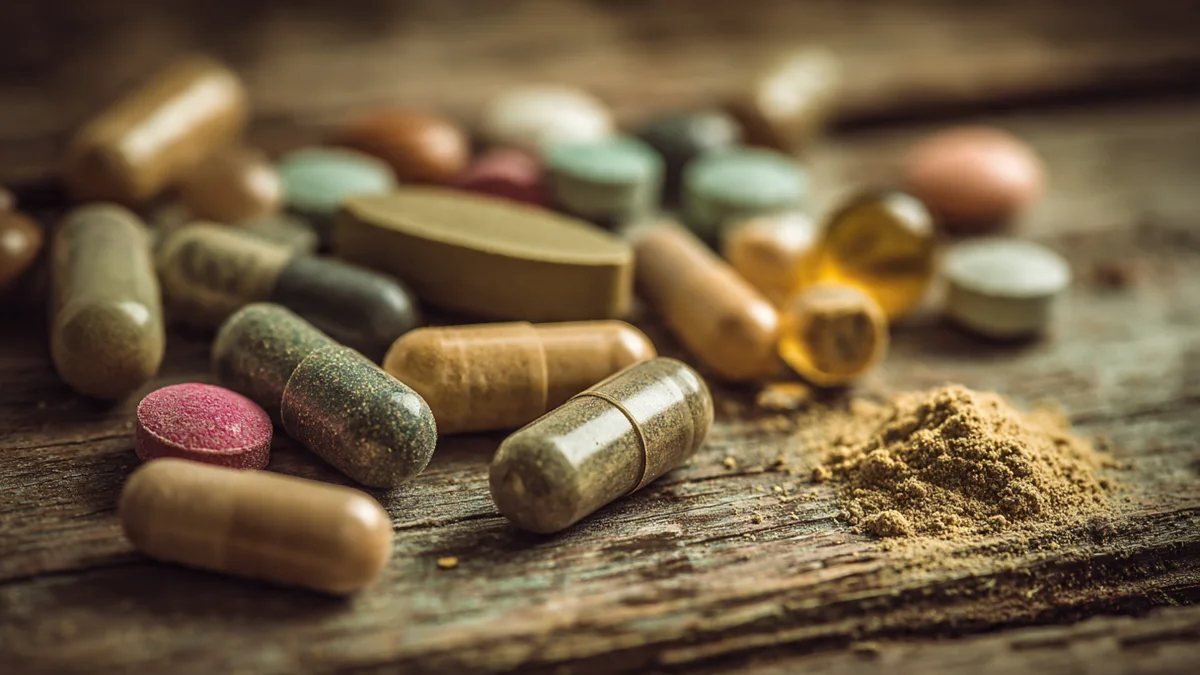
The Vitamin Aisle Promise
Walk into any pharmacy in America and you pass a wall of antioxidant supplements. Vitamin E for heart health. Beta-carotene for cancer prevention. Vitamin A for immune defense. Americans spend roughly $5.7 billion on antioxidant supplements annually, driven by a simple narrative: free radicals damage cells, antioxidants neutralize free radicals, therefore antioxidant pills prevent disease and extend life.
The logic sounds clean. Reactive oxygen species genuinely damage DNA, proteins, and cell membranes. The leap from mechanism to supplement bottle seemed short. It turned out to be a cliff.
What the Cochrane Team Found
In 2007, a research group led by Goran Bjelakovic at the Copenhagen Trial Unit published a systematic review in JAMA covering 68 randomized controlled trials and 232,606 participants. Five years later, they expanded the analysis for the Cochrane Collaboration, reaching 78 trials and 296,707 participants. Both reviews asked one question: do antioxidant supplements reduce mortality?
Not only did the supplements fail to prevent death, several actively increased it. In 56 trials judged to have low risk of methodological bias, supplements raised the relative risk of dying by 4% (RR 1.04, 95% CI 1.01–1.07). Beta-carotene drove a 5% increase (RR 1.05, 95% CI 1.01–1.09). Vitamin E contributed a 3% increase (RR 1.03, 95% CI 1.00–1.05). Vitamin C and selenium showed no significant effect in either direction.
These are not marginal numbers buried in subgroup analyses. Trial sequential analysis confirmed the findings had crossed the threshold for definitive evidence. Enough data exists to rule out the possibility that antioxidant supplements reduce mortality.
A 4% Increase Matters More Than It Sounds
Relative risk numbers can feel abstract. Consider this calculation: if the baseline three-year mortality rate in these trial populations was approximately 10.6%, a 4% relative increase translates to an absolute risk increase of about 0.4 percentage points over three years. That yields a Number Needed to Harm of roughly 250. For every 250 people taking antioxidant supplements for three years, one additional person dies who otherwise would not have.
An estimated 50% of American adults take dietary supplements regularly. If even 30 million are consuming beta-carotene or vitamin E pills, the arithmetic becomes uncomfortable. A small relative risk, multiplied by the supplement industry's own scale, turns into a population-level problem.
Why Would Antioxidants Kill?
The most probable explanation involves hormesis, the principle that biological systems require moderate stress to function properly. Reactive oxygen species are not purely destructive. They serve as cellular signaling molecules, activate DNA repair pathways, and trigger apoptosis of damaged cells that might otherwise become cancerous. Flood the system with exogenous antioxidants, and you suppress these protective responses.
Michael Ristow's research at ETH Zurich has demonstrated that exercise-induced oxidative stress activates the body's endogenous antioxidant defenses, and that taking antioxidant supplements after exercise actually blocks the metabolic benefits of physical activity. Your body's own repair machinery may be far more sophisticated than anything a vitamin pill can replicate.
A second factor involves dose. Dietary antioxidants arrive in food matrices with thousands of other bioactive compounds, at modest concentrations, absorbed slowly. Supplement doses are pharmacological, often 10 to 100 times higher than dietary intake, and arrive as isolated compounds. At those concentrations, some antioxidants become pro-oxidants, reversing their intended effect entirely.
The Strongest Counterargument
The most credible objection comes from nutrition scientists who argue that the Cochrane review pools radically different populations: healthy volunteers alongside cancer patients, cardiac patients, and people with liver disease. Balz Frei of the Linus Pauling Institute has noted that the increased mortality signal could be driven by interactions between supplements and disease states rather than by harm in healthy people. Meta-regression did not find a significant difference between primary and secondary prevention trials, but statistical power for that subgroup comparison is limited.
Then there is the stubborn observational evidence. People who eat antioxidant-rich diets consistently show lower mortality. If the molecules are harmful, why does dietary intake track with better outcomes? The most likely resolution is that antioxidant-rich foods contain fiber, phytochemicals, and mineral cofactors that supplements lack, and that the habit of eating well is a proxy for dozens of other healthy behaviors that no pill can replicate.
What We Didn't Prove
This meta-analysis cannot identify which specific populations face the greatest risk from supplementation. The included trials enrolled predominantly older, Western participants with a mean age of 63. These findings may not apply to younger adults or to people with documented micronutrient deficiencies, where supplementation serves a different biological purpose entirely. Trial durations ranged from 28 days to 12 years, making it impossible to distinguish between acute and chronic harm with precision. Critically, the review addresses supplements in pill form at pharmacological doses. It says nothing about dietary antioxidant intake from fruits, vegetables, nuts, and whole grains, which the observational evidence consistently supports.
The Bottom Line
The largest systematic review ever conducted on antioxidant supplements found that beta-carotene and vitamin E increase your risk of dying. Vitamin C and selenium appear neutral. No antioxidant supplement tested reduced mortality. For every 250 people who take these pills for three years, one extra person dies. The $5.7 billion Americans spend on antioxidant supplements each year is not merely wasted. For some of these products, it is buying a small but real increase in mortality risk.
What You Can Do
Stop taking beta-carotene and vitamin E supplements unless a physician has prescribed them for a documented deficiency. Get your antioxidants from food: berries, leafy greens, nuts, dark chocolate, and green tea deliver the same molecules alongside thousands of synergistic compounds. If you take a daily multivitamin, check the label for vitamin E and beta-carotene content. Many popular brands include both at levels comparable to those tested in the harmful trials. Talk to your doctor before stopping any prescribed supplement, but understand that "natural" and "antioxidant" on a label do not mean "safe at any dose." For most people, the best antioxidant strategy is a plate of vegetables, not a pill.